

Disinformation is power
The Growing Power of Digital Deception

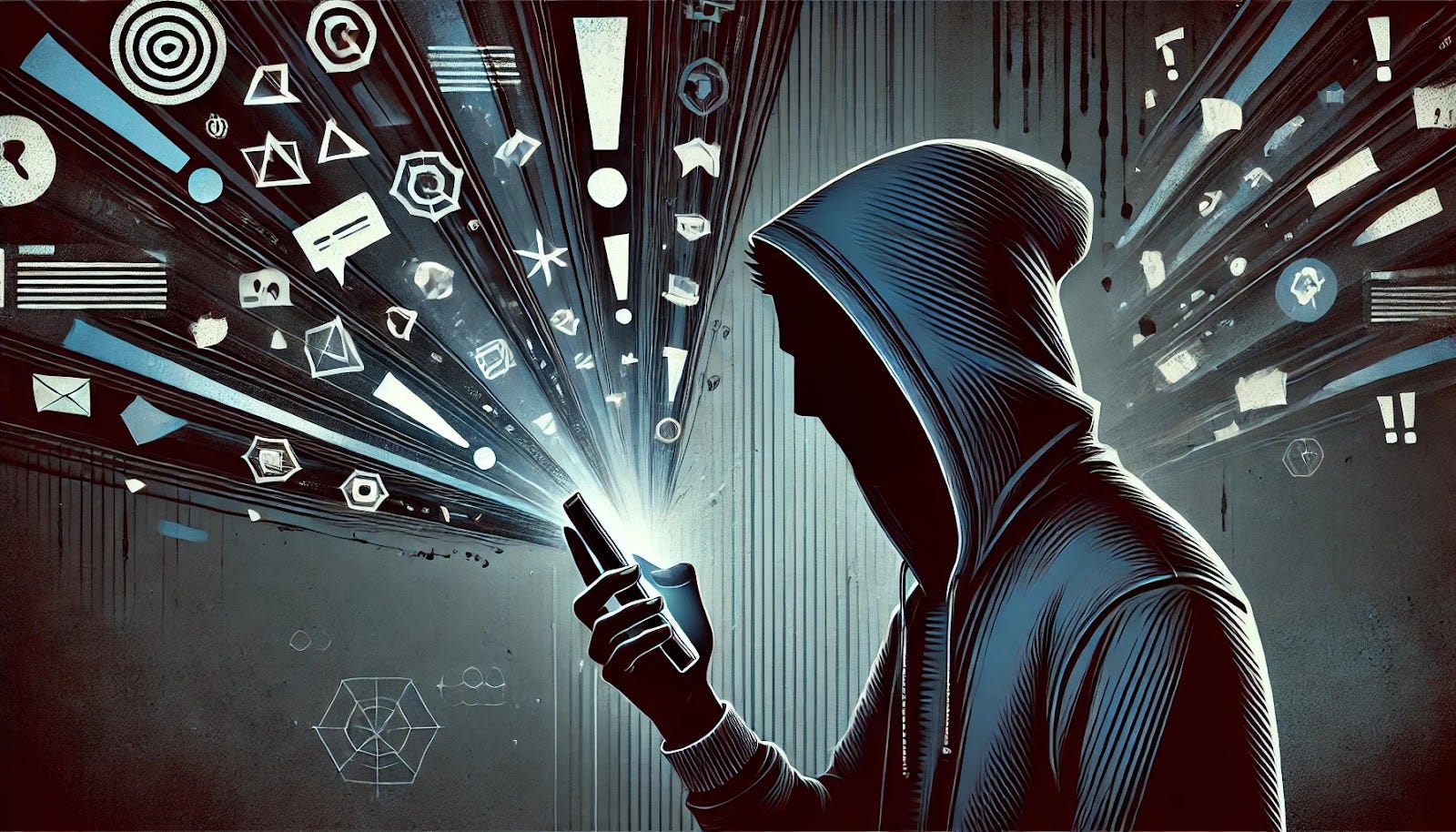
"The most valuable commodity I know of is information."
– Gordon Gekko, Wall Street
One of the many benefits of modern society is the ability to transfer information almost instantly. Unfortunately, that doesn't mean all this information is useful or factual. For some, the spread of bad information is the goal. This isn't a new phenomenon, but advances in technology and the rise of social media have significantly enhanced the effectiveness of these disinformation campaigns.
Misinformation and disinformation both involve spreading misleading or false information, often referred to as hoaxes or fake news, but they differ in intent and impact.
Misinformation: is false or inaccurate information spread without the intent to deceive.
Disinformation: is false information deliberately spread with the intent to deceive.
For this post, I'm specifically focusing on disinformation due to its inherently malicious nature.
“It’s not that people are lazy or don’t want to know the truth. The platforms’ reward systems are wrong.”
-Gizem Ceylan
Disinformation in Social Media
I’m sure we all remember the flood of terrible information that littered social media at the onset of the COVID-19 pandemic, promoting home remedies for the virus. Many scholars wondered how this misinformation spread so easily over social networks. Some attributed the spread to personal bias, while others blamed a lack of critical thinking and media literacy. However, in a recent study Gizem Ceylan—a behavioral scientist at Yale, argues that social media platforms are to blame. Ceylan suggests that social media platforms play a pivotal role in this phenomenon. By prioritizing engagement through likes, shares, and comments, these platforms inadvertently incentivize the spread of sensational and misleading content, making them powerful catalysts for the dissemination of disinformation. Ceylan believes that this issue can be mitigated by shifting the focus to rewarding users who prioritize sharing accurate information.
AI and Deep Fakes
While social media may spread disinformation, new technologies like AI and deepfakes are making the situation even more complex. The term "deepfake" combines "deep learning" and "fake" to describe a method of manipulating images, videos, or audio so convincingly that it's nearly impossible for the human eye or ear to detect the forgery. Deepfakes are generally created using a type of neural network called a Generative Adversarial Network (GAN).
GAN: a neural network consisting of two algorithms. One algorithm forges an image (forger) while the other algorithm tries to detect the forgery (investigator). If the investigator succeeds in identifying the forgery, the forger learns from it and constantly improves. A process also known as deep learning.
As mentioned earlier, deepfakes come in various forms, with the most well-known being 'face-swapping,' where the faces of famous or influential people are superimposed into different contexts. Below is a simple example of this technique.
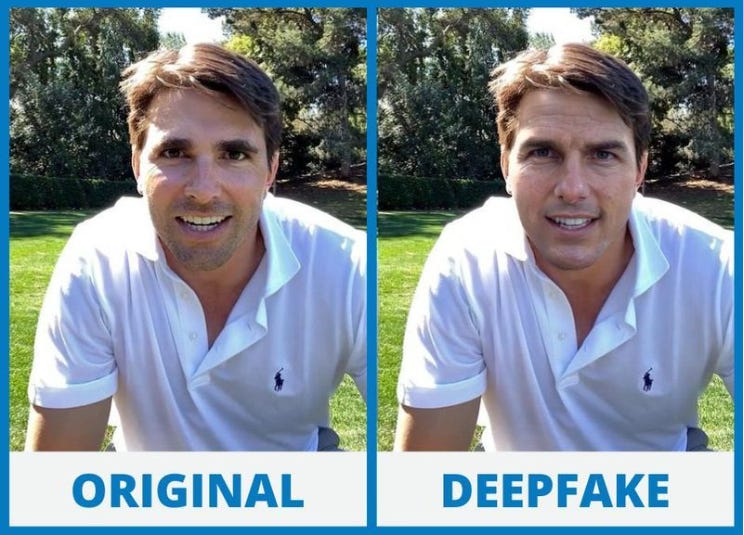
While the face swap above might seem harmless, deepfake technology has advanced well beyond simple face replacements. To demonstrate just how far it has come, I’m sharing a video created by the Dor Brothers AI video production studio. They were able to produce these videos in about 7 hours—less than a typical workday. Unsurprisingly, their video went viral, gathering over 50 million views across various social media platforms.
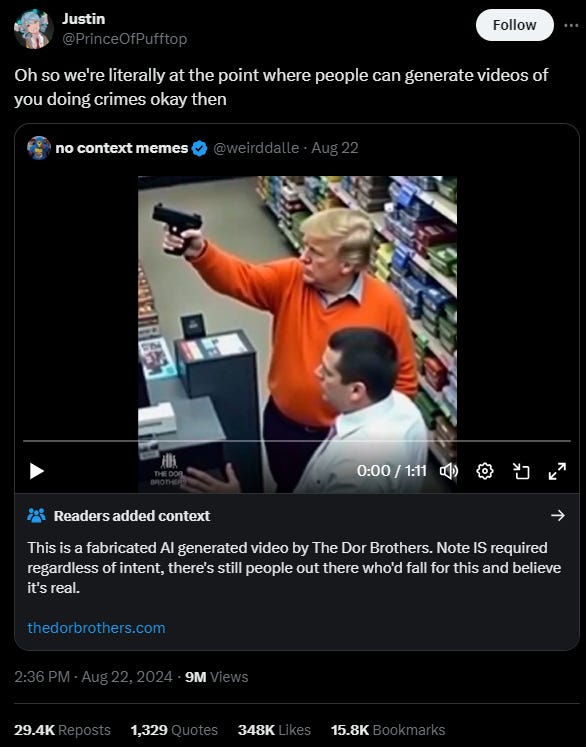
While it’s tempting to label deepfake technology as purely malicious, it’s important to consider the original intent behind its development. Deepfakes were initially created as tools for entertainment and creative expression, offering the ability to produce realistic visual effects and push the boundaries of storytelling. However, like many technological innovations, their application has expanded far beyond these original purposes. This shift raises serious concerns about the broader impact deepfakes and AI are having on society, from eroding trust in media to fueling disinformation campaigns.
A Continuing Threat Society
Disinformation has plagued us long before social media. Back then, propaganda spread through radio, telegraphs, and even street leaflets, with tactics dating back to the Roman-Persian wars. The Soviets, for example, ran campaigns claiming the U.S. invented AIDS and supported apartheid—a strategy highlighted by Sean O’Brien, CEO of @Risk Technologies. Today, disinformation poses an even greater threat, eroding trust in institutions and deepening societal divides.
Disarming Disinformation
While disinformation campaigns are still a serious threat to a healthy society, there are some important steps we can take to push back against them.
Educate the public:
Like this post, take the initiative to educate those around you on how to recognize and stop the spread of disinformation—such as sharing fact-checking resources and encouraging critical thinking about online content.
Strengthen digital platforms:
Push for better algorithms and tougher content moderation on digital platforms to help stop the spread of disinformation—like advocating for social media platforms to quickly flag and remove fake news stories.
Promote Responsible information sharing:
Remind people to double-check sources before sharing content online to keep disinformation from spreading—like taking a moment to verify a headline before reposting it.
Support regulatory efforts:
Get behind efforts that hold people and platforms accountable for spreading false information—such as supporting laws that require transparency in political ads on social media.
Encourage the ethical use of technology:
Promote using technology responsibly by supporting tools and practices that focus on truth and honesty—like encouraging the development of AI that detects deepfakes rather than creating them.
Combating disinformation is not a task for any single entity—it requires a collective effort. Every individual, organization, and platform has a role to play in pushing back against the spread of falsehoods. By staying vigilant and proactive, we can protect our society from the damaging effects of disinformation, foster a culture of truth, and build a more trustworthy digital environment for everyone.
Further Reading & Other Resources
Disinformation Stops With You Infographic Set
Check out these quick and easy infographics from CISA that break down how you can spot and stop disinformation. Perfect for anyone who wants to stay sharp and help keep misinformation in check.
Sharing of Misinformation is Habitual, Not Just Lazy or Biased
This article dives into why people keep sharing misinformation—it’s more about habits than just being lazy or biased. A great read if you’re curious about the psychology behind why false info spreads so easily.
How and Why Does Misinformation Spread?
This piece breaks down how misinformation spreads like wildfire and the reasons behind it. If you’ve ever wondered why fake news catches on so fast, this article’s got you covered.
Explore the work of The Dor Brothers, a duo known for their insightful takes on modern issues, including the spread of misinformation. Their site is full of interesting articles and resources that dive deep into the things that shape our world today.
Russia’s Disinformation Campaigns
This article uncovers how Russia has been spreading disinformation and the impact it’s had on global events. If you’re curious about how these campaigns work and why they matter, this is a must-read.